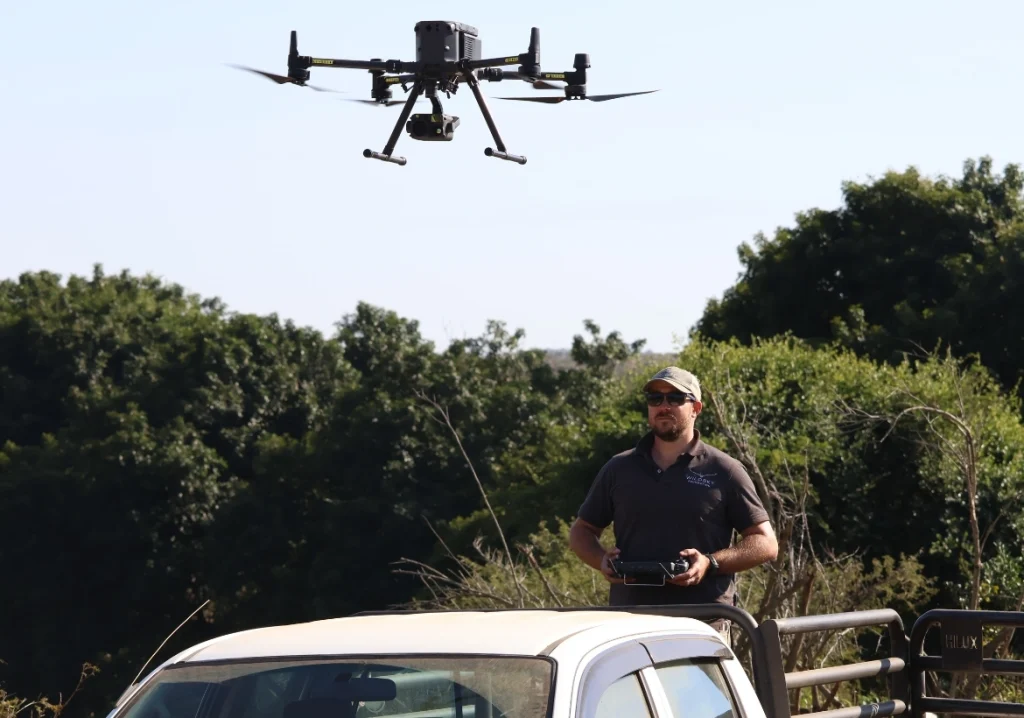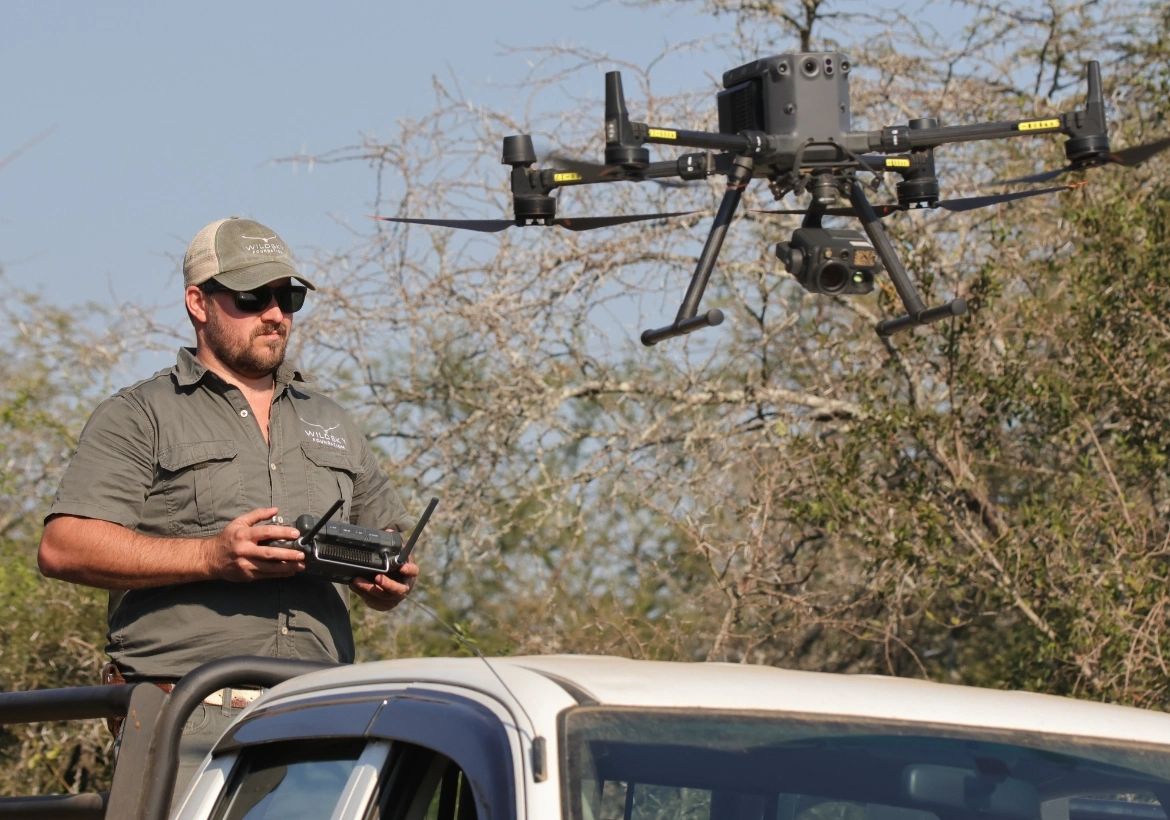
Locating a Cheetah across a landscape as large and densely vegetated as Hluhluwe-iMfolozi Park is challenging, even with modern equipment on hand. The Wildlife ACT monitoring teams’ knowledge of the park and its cheetahs remains central, with drone support adding an incredibly valuable tool to these operations.
During the recent collaring operation carried out with Ezemvelo KZN Wildlife, the support provided by WildSky Foundation played an essential role in searching for candidates.
Thermal and high-resolution imagery allowed the WildSky Foundation team to detect Cheetah from a distance, confirm their identity, and assess their condition before committing ground and veterinary resources, all while keeping disturbance to a minimum.
Once a Cheetah was darted, the drone maintained visual contact as it moved through thick cover, guiding the veterinary team directly to the animal and shortening the time to treatment.
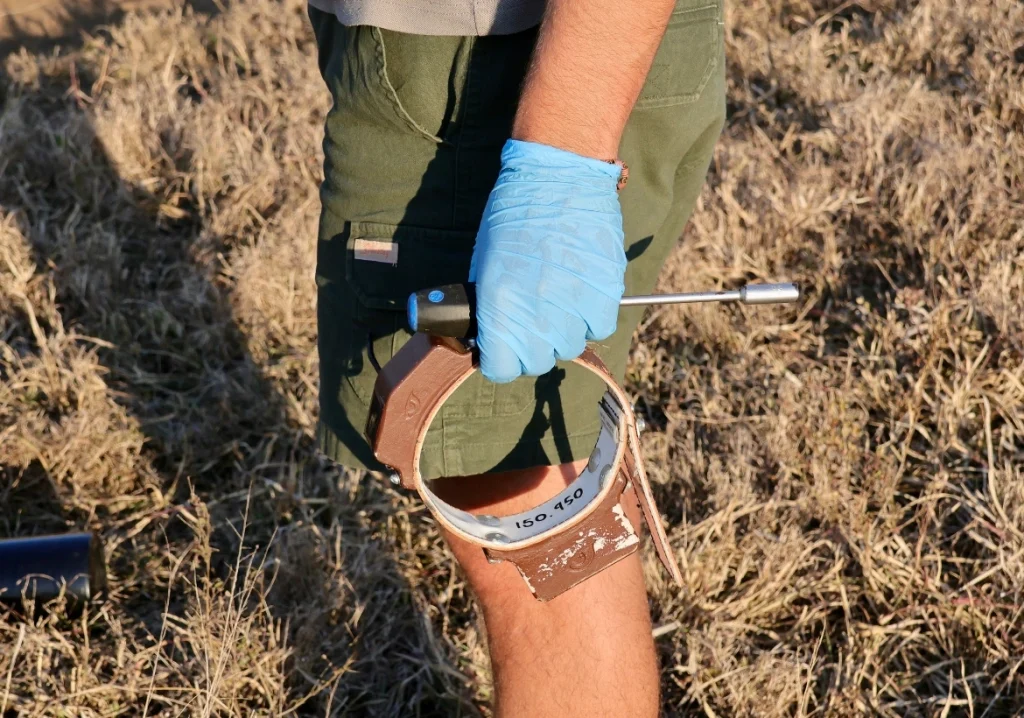
The collars themselves, sponsored by Forever Wild Foundation and designed by Wildlife ACT Innovations, combine satellite and VHF technology to support this same kind of close monitoring long after an operation ends. The satellite component records GPS points at set intervals, giving teams a broad view of how an individual uses the landscape, while the VHF component allows monitoring teams to locate a collared Cheetah directly on the ground, which is essential in the dense thickets and rugged terrain where visual confirmation isn’t always possible.
Photos: Wildlife ACT